Chlorine or saltwater for a new pool?
Both conventional chlorine dosing and salt chlorination disinfect with chlorine. The difference is how it reaches the water: one uses chlorine products, while the other generates it through electrolysis. Your choice depends on pool use, equipment and maintenance.
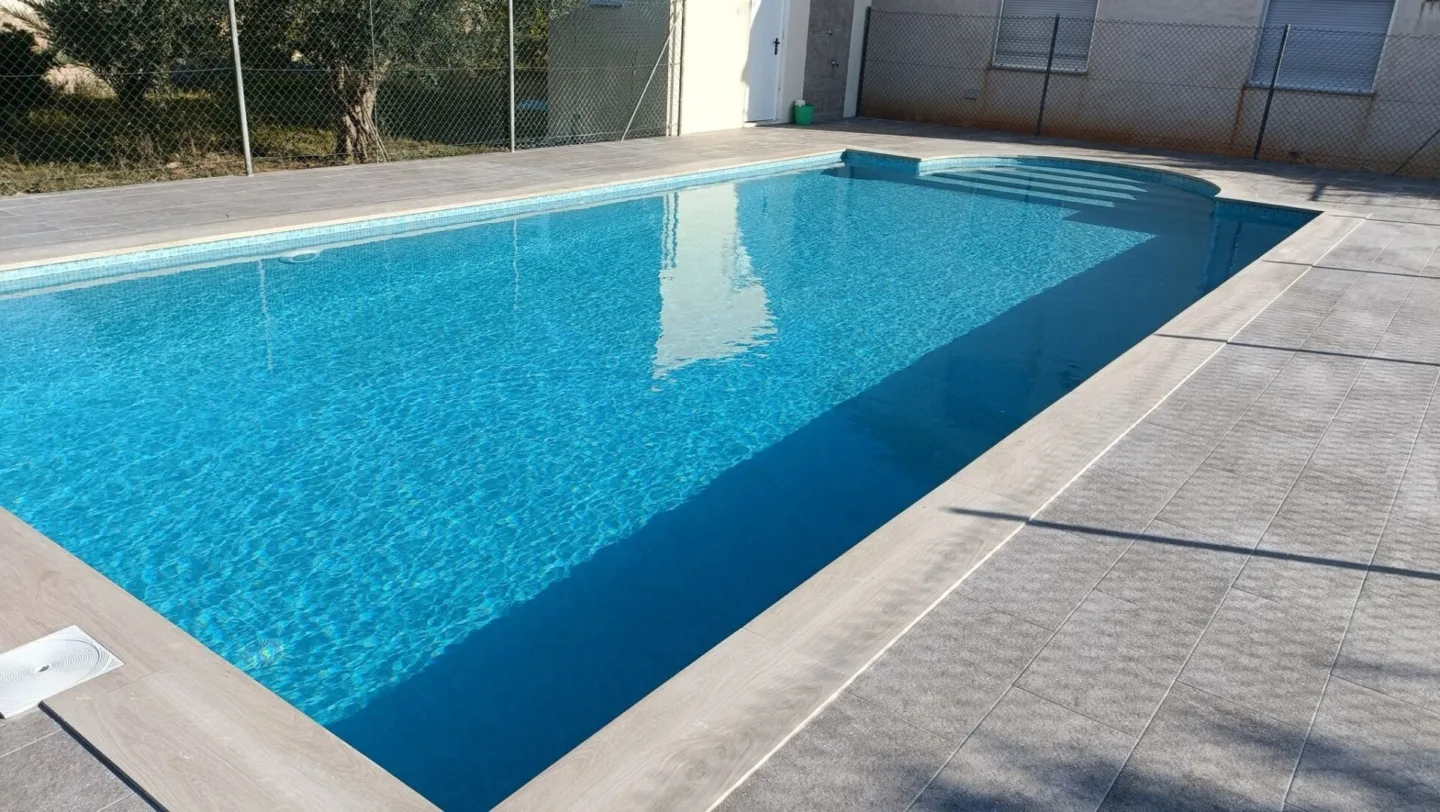
What choosing between chlorine and saltwater actually means
The term “saltwater pool” can suggest that dissolved salt alone disinfects the water. In a salt chlorination system, equipment generates chlorine from that salt through electrolysis. It is therefore still a chlorine pool, and the system does not remove the need for water checks.
With conventional dosing, disinfectant is added using products suited to the installation. This can be organised in different ways, including dosing equipment. Describing the choice as manual chlorine versus automatic saltwater is misleading: the level of automation depends on the equipment actually included.
Both options need suitable filtration and water monitoring. The pump circulates water, while the filter traps particles; disinfection performs a separate function. Adding a salt chlorinator will not correct a poorly designed circulation system or replace routine pool cleaning.
The useful comparison covers the complete installation: filtration, disinfection, measurement and maintenance arrangements. When designing a new concrete pool, these functions can be planned together, allowing you to assess how the whole system will work in everyday use.
How conventional chlorine dosing works
Conventional dosing supplies disinfectant through the product and delivery method selected for the installation. Both must suit the equipment and planned maintenance routine. Products and application methods are not automatically interchangeable, so their instructions need checking before making a change.
Where chlorine is added manually, the owner or maintenance provider needs a routine for testing and adjustment. Requirements vary with pool use, temperature and water conditions. A pool that is rarely used still needs supervision, even when the water appears undisturbed.
Automated dosing is also available. What it does depends on the parameters measured and the functions controlled by the equipment. Automation can make particular tasks easier, but operation still needs checking, consumables need attention and measurements must remain reliable.
This approach may suit an established maintenance routine or the requirements of a particular project. When comparing it with salt chlorination, include the equipment and tasks actually proposed for each. Comparing a basic installation with a more fully equipped system gives an incomplete picture.
What a salt chlorination system needs
Salt chlorination uses a chlorinator with a cell and associated controls. Equipment selection should reflect the water volume and expected operating conditions. Being able to connect a unit to the available pipework does not establish that it is suitable for the pool.
The installation needs enough room to inspect and maintain its components. Mounting, water circulation and connection requirements must also be followed. Check pH control separately: it should not be assumed to be included simply because a quotation specifies salt chlorination.
Before choosing this system, review:
- Whether materials, fittings and equipment suit the intended salinity conditions.
- The space available for the cell, controls and maintenance access.
- The electrical supply and protection required by the equipment.
- How disinfectant levels and pH will be measured and controlled.
- The cleaning, inspection and eventual component replacement involved.
Salt should not be topped up according to a fixed habit without checking its concentration. Water loss, replacement water and other circumstances can change the level. Follow the equipment instructions and actual pool conditions, using measurements to guide what needs adding.
What to decide during construction
The position of the plant room or equipment enclosure affects everyday access and future additions. Plan the pump, filter and disinfection layout with working space around them. Equipment may fit inside a tightly packed cabinet but still be difficult to dismantle or inspect.
Pipework routes, service openings and electrical provision also need coordinating. If you may add a salt chlorinator or extra controls later, define the preparation required. A general description such as “salt-ready” does not explain which spaces or connections have been provided.
Compatibility matters for components in contact with pool water or exposed to splashes under the intended conditions of use. Check the specifications for ladders, fittings, heat exchangers and other equipment. Those selecting and supplying these components need to know which disinfection system is planned.
The internal finish belongs in this discussion, although it does not determine the disinfection method on its own. Pool tiling materials and grout must be used within their intended conditions. Correctly balanced water remains relevant whichever system you choose.
Cost, maintenance and routines: making the choice
Initial cost depends on the equipment included, its capacity, the level of automation and the installation itself. Salt chlorination adds specific components, but a meaningful cost comparison needs a clearly defined conventional alternative. Otherwise, the proposals may offer quite different functions.
Running the pool involves consumables, electricity, servicing and replacement parts. Your maintenance time or the service you employ also matters. Neither approach should be presented as free to run after installation, and savings should not be promised without understanding the project and its use.
For a home occupied intermittently in Guardamar, La Marina or Pilar de la Horadada, establish who will check the water while you are away. Automation can help with certain tasks, but a supervision plan is still needed for either salt chlorination or conventional dosing.
Start with practical questions: who will maintain the pool, which checks or adjustments should be automated, how much equipment space is available, and which components are compatible? Those answers help identify a complete system suited to the property and the way you will use it.
OndaMar plans the pool systems alongside the pool design. You can tell us how you expect to use and maintain your pool so we can identify which system to explore for your project.