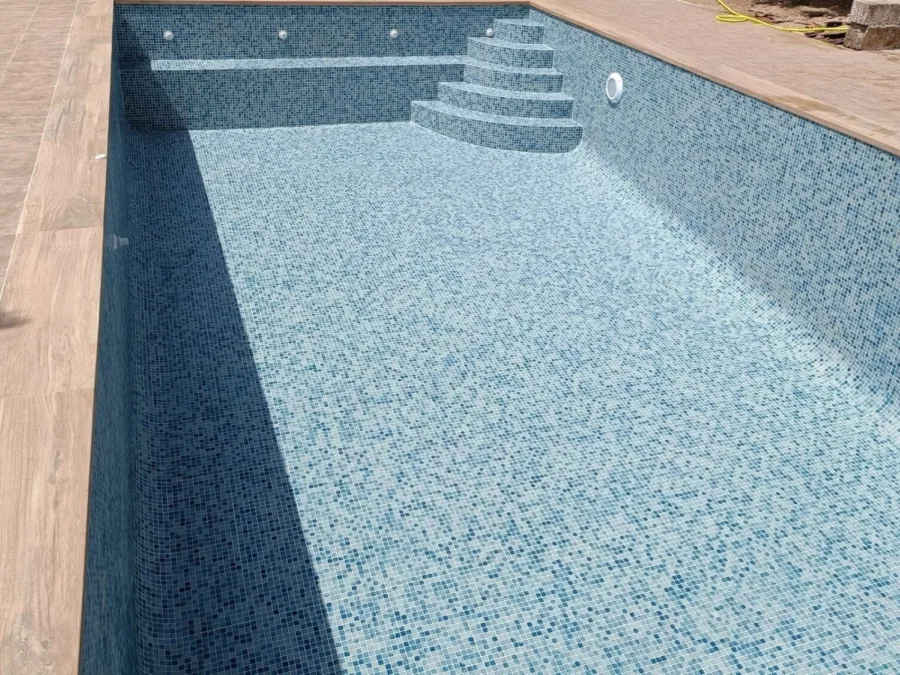
Pool with blue glass mosaic, curved steps and bench
Blue glass mosaic (gresite)
View project →The finish shapes the look of the pool, its feel and the maintenance it needs. We help you choose between glass mosaic, porcelain and natural stone, and we lay it on new builds and renovations.
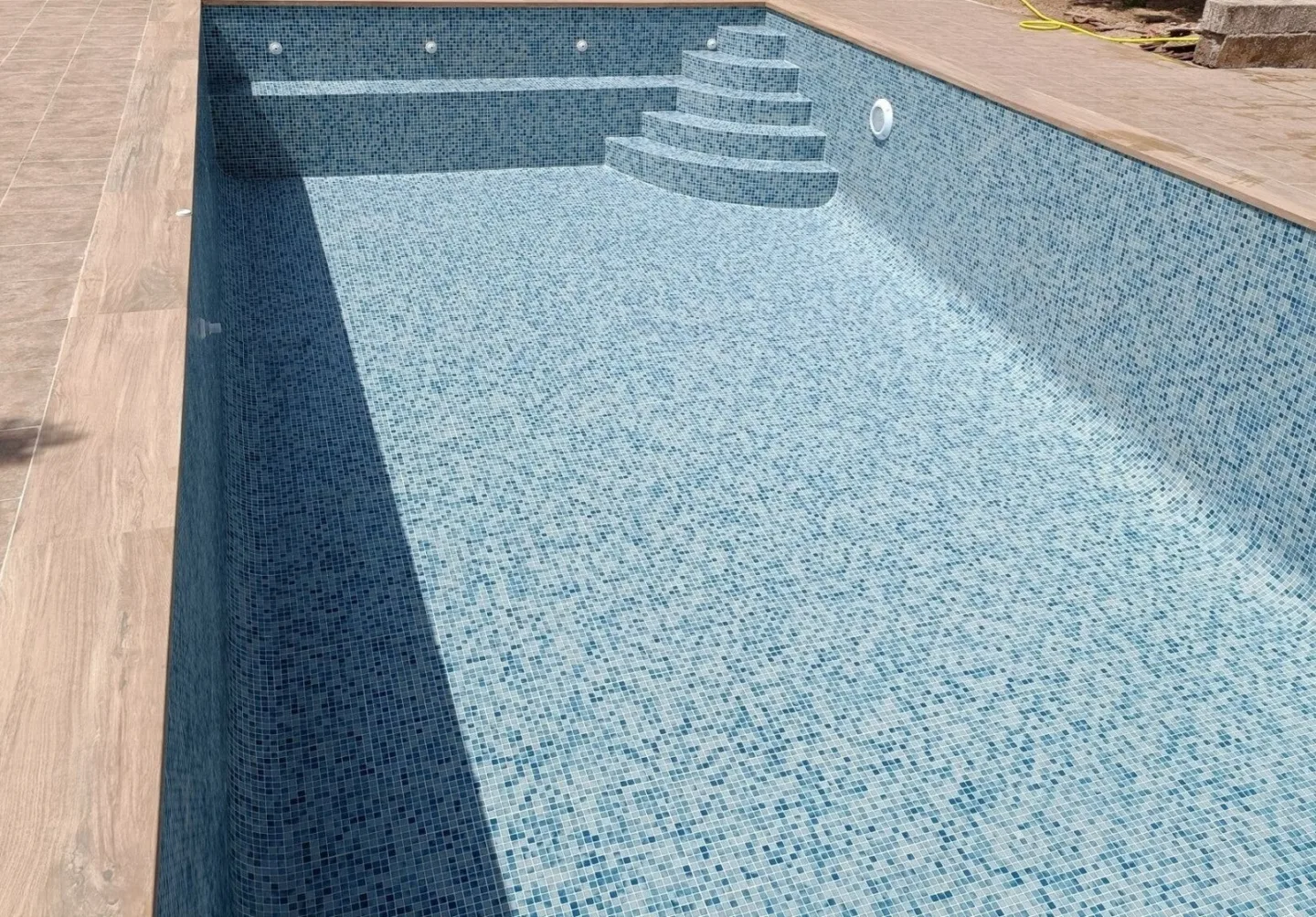 Blue mosaic tiles · Curved steps
| Material | How it looks | Advantages | Bear in mind |
|---|---|---|---|
| Glass mosaic (gresite) | Deep blue water, classic look; small tiles that follow curves, steps and benches. | Wide range of colours, fits any shape, easy to repair in patches. | More grout lines: the water must be kept balanced to avoid staining. |
| Porcelain | Smooth surface in medium and large formats; stone, sand, grey or white tones. Turquoise or greenish water depending on the colour. | Very easy to clean, few joints, resists frost, sun and chemicals; the same material can run from shell to coping to surround. | More demanding to lay; large formats do not suit tight curves. |
| Natural stone | A natural, warm finish, mainly on the coping and the surround. | Every piece is unique; it ages well; suits Mediterranean gardens. | Only certain stones work inside the shell; needs treatment and sealing. |
2.5 cm glass tiles laid in sheets over the rendered shell. Because the pieces are small, they wrap around steps, benches and rounded corners without awkward cuts. The water colour depends on the shade chosen: from a light beach blue to deep blue or green.
We lay it with adhesive and grout rated for pools and salt water. It is the usual choice when renovating older pools that already had mosaic.
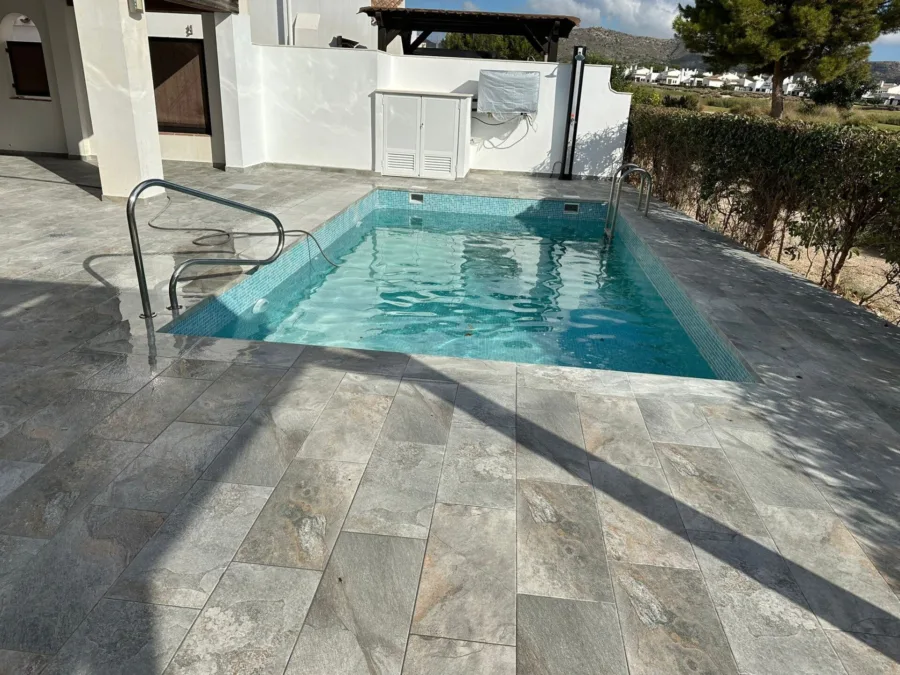
Low-absorption porcelain tiles in formats such as 30 × 60 cm, in stone, concrete, sand or white finishes. Inside the shell they give a smooth surface that cleans with very little effort; outside, on the coping and the surround, the same non-slip material makes the pool and the garden look like one piece.
It stands up to frost, the local sun and treatment chemicals and keeps its colour well. It is a common choice for new pools in a contemporary style.
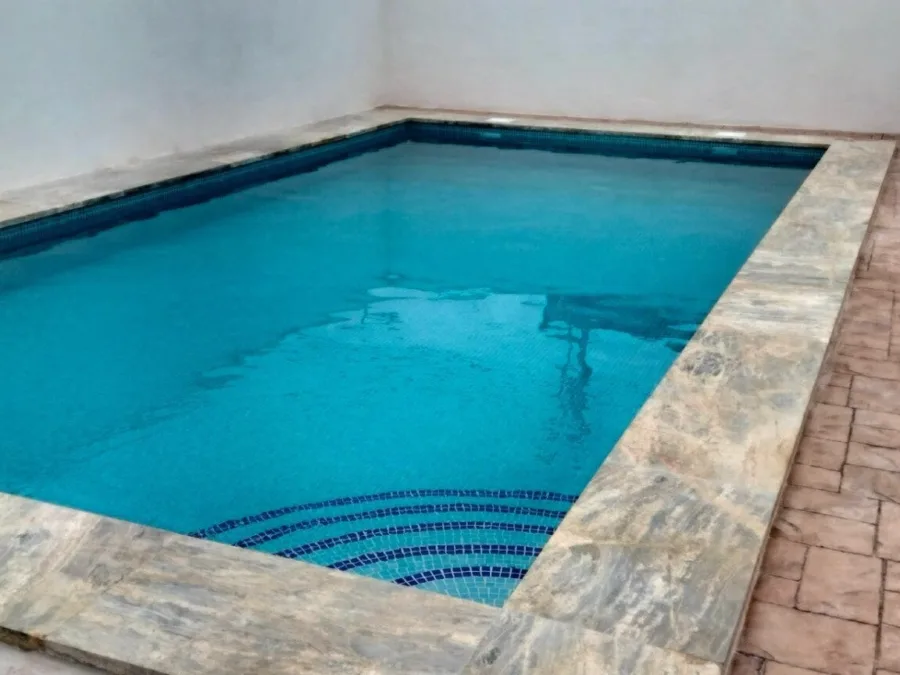
For the coping and the paving around the shell, natural stone gives a finish no artificial material fully imitates. We choose low-absorption, non-slip stones and treat them following the manufacturer’s recommendations for pool use.
Inside the shell we only use stone in specific cases and with specific treatment; we explain it if that option interests you.
The interior finish is always under water: absorption, grout and chemical resistance matter. The coping is the edge you step on wet: it must not be slippery or hot. The surround is the paving around it: drainage and how it matches the garden matter. We choose each one separately and combine them so the whole works.
On a new pool the finish is chosen at the design stage. On a renovation, we remove the old finish, level and waterproof the shell and lay the new one. In both cases the laying is half the result, which is why we take as much care over it as over the material.
Neither is better at everything. Glass mosaic gives the deep blue water colour and follows curves and steps; porcelain is smoother, easier to clean and comes in large formats and stone or sand tones. It depends on the look you want and the maintenance you prefer.
Both glass mosaic and good-quality porcelain cope well with salt chlorination. What matters most is the laying: the adhesive and the grout must be rated for pools and for salt water.
Inside the shell only certain stones, and with treatment; it is more usual on the coping and the surround, where it gives a very natural finish. We tell you which stones are suitable and which are not.
Properly laid glass mosaic or porcelain lasts many years. What shortens its life is poor laying, badly balanced water or a shell that moves.
Tell us what you would like to build or renovate and where the property is. We will tell you whether we can help and what the next steps would be.