Concrete or prefabricated pool: which differences matter?
Choosing between a concrete and a prefabricated pool depends on the plot, access, design and maintenance needs. Concrete allows a tailored layout; a prefabricated pool can work well when its model and installation requirements suit the project.
What does “prefabricated pool” mean in this comparison?
The term covers several different systems. Here, it mainly refers to fibreglass-reinforced polyester shells delivered to the property in one piece. Other prefabricated or modular systems may have different characteristics. Identify the actual product being proposed before drawing conclusions about how it compares with a concrete pool.
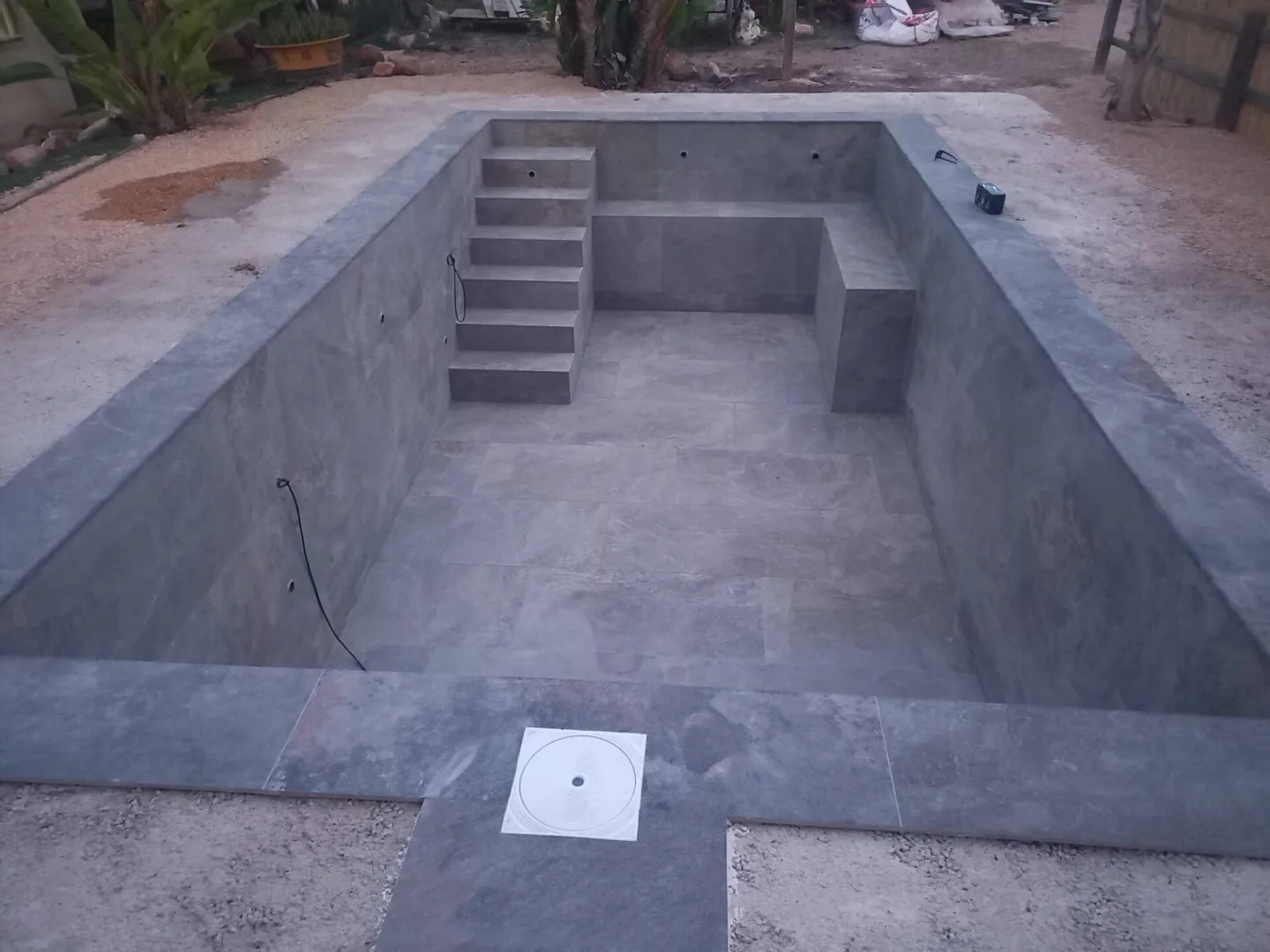
With a gunite (shotcrete) pool, the concrete shell is built on the plot to suit the design. With a one-piece prefabricated pool, a previously manufactured shell is installed. This changes how the work is organised, but both options still require the site to be prepared correctly.
A prefabricated pool also needs an assessment of the ground, the specified supporting works, equipment installation and surrounding finishes. A concrete pool requires a coordinated construction sequence on site. Comparing the shells alone leaves out much of the work needed to deliver a complete, usable pool.
The useful question is which solution suits your property and intended use. Compare complete proposals covering equivalent surrounding work and equipment specifications. This helps separate differences between the construction systems from differences caused simply by one quote including work that another leaves out.
Shape, dimensions and fitting the available space
A concrete pool allows the shape, depth and internal features to be designed within the project’s technical constraints. This flexibility can be useful on irregular plots, in patios with particular restrictions or where the relationship between the pool and terrace calls for a specific arrangement.
A prefabricated pool comes in models with established dimensions and internal features. If a model suits your space and preferences, it can simplify some decisions. Check the overall installation dimensions and the model’s requirements alongside the usable bathing area: these do not describe the same footprint.
| Aspect | Concrete pool | One-piece prefabricated pool |
|---|---|---|
| Shape | Designed for the project. | Depends on the available models. |
| Steps and benches | Incorporated into the agreed design. | Usually determined by the model. |
| Internal finish | A compatible finishing system is selected. | Depends on the manufacturer’s options. |
| Access to the plot | Materials and construction equipment need access. | Delivery and positioning of the complete shell need planning. |
For either option, include the cover, furniture and walking routes on the plan. A pool can physically fit while leaving an awkward outdoor space. Assess the whole plot and check with your town hall (ayuntamiento) about the planning requirements that apply before settling the layout.
Access and ground conditions: check before choosing a shell
Installing a prefabricated shell requires a workable transport and positioning plan. Its size, the distance from the unloading point and any obstacles affect the equipment needed. Having enough room in the garden is only part of the assessment: there must also be a feasible way to get it there.
A concrete pool avoids bringing in a complete shell, but equipment and materials still need access. An enclosed patio or narrow passage can complicate excavation and soil removal. This option therefore also needs a realistic access assessment before construction arrangements or costs can be properly defined.
Ground conditions affect both systems. Supports, backfilling and other preparatory work must follow the project and the chosen system’s requirements. Particular conditions need technical assessment before work continues. Neither type of shell can, by itself, make up for an inadequately prepared site.
On plots in Orihuela Costa, where properties and access arrangements vary, a visit can reveal constraints that a catalogue cannot show. The findings may rule out an option, change the installation arrangements or confirm that both alternatives remain practical for the property.
Durability, finishes and repair options
There is no reliable universal lifespan to assign to either system. Performance depends on product or construction quality, suitability for the ground and ongoing maintenance. How equipment is operated and how problems are dealt with also influence the condition of the pool over time.
A concrete pool’s internal finish can be repaired or renewed using a solution suitable for the existing surface. This creates scope for changes, but does not mean any finish can go directly over any base. The shell’s condition and the cause of damage need assessment first.
Polyester pools may also have procedures for repairing or renewing their finish. The options depend on the material, the affected area and guidance from the manufacturer or specialist. Before choosing a model, establish what support is available and how repairs would be assessed and carried out.
If there is a leak or crack, the first task is to identify its cause. The problem may involve the shell, a connection or a pipe. Experience in concrete pool renovation and refurbishment should not be treated as an automatic assessment of every other construction system.
How to compare cost, maintenance and the finished result
Cost depends on the complete installation: preparation, access, shell, equipment, connections, coping and surrounding areas. A price for supplying a shell cannot be compared directly with a finished-pool proposal. Ask for both options to describe the included work and identify anything still to be decided or priced.
Choosing a particular shell material does not remove maintenance. Both pools need water quality checks, filtration maintenance and surface cleaning using compatible methods. The pool’s shape and access to equipment also affect how straightforward these tasks are, so consider them as part of the comparison.
Review the documents, warranty terms and available support for each proposal. Ask how problems are handled and who is responsible for each part of the work. General claims about speed or simplicity are of limited use unless they relate to the actual installation at your property.
A prefabricated pool can suit a project when an available model fits the intended use, access and plot. Concrete may suit you when the shell and its junctions need more flexibility. Base the decision on those needs and a complete quote, without assuming either option is always better.
OndaMar specialises in building concrete pools. If this approach suits your plot, the next step is to define the design and site constraints so you can assess a proposal with a clearly comparable scope.