Which cover should you choose for a concrete pool?
The right pool cover depends on whether you want to reduce debris, retain warmth, restrict access or reclaim usable space. Each system needs different preparation during construction, and a thermal blanket must not be treated as a safety cover.
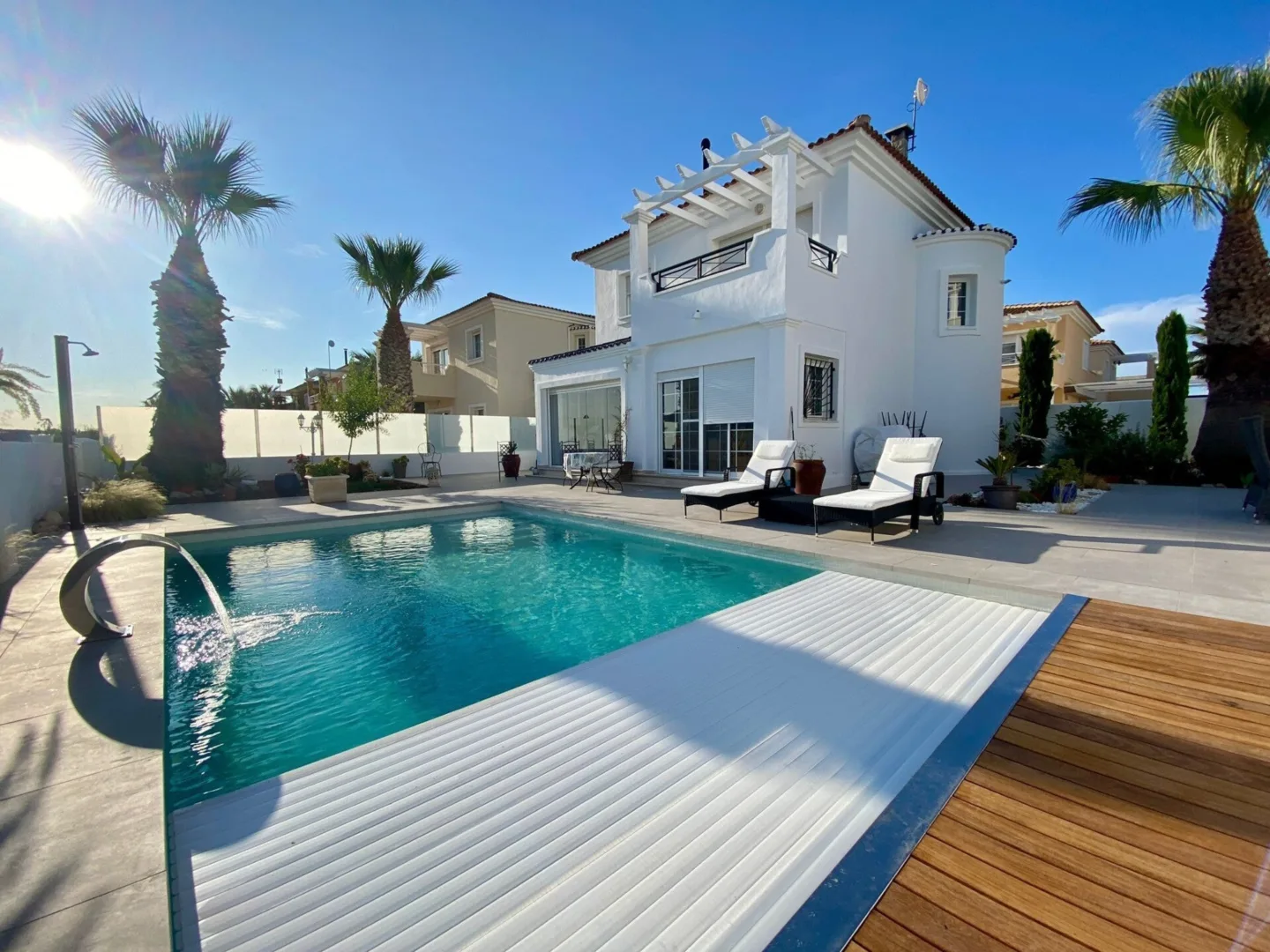
Decide what you need before comparing pool covers
Pool covers vary considerably. A floating thermal blanket, a slatted cover and a telescopic enclosure have different functions and space requirements. Before choosing a system, establish which jobs you want it to do and which matter most for your property.
If your priority is keeping leaves and dirt out, consider how much protection each option provides and how it is cleaned. For retaining warmth, look at thermal performance and everyday use. If you need to restrict access, examine the system’s specific safety capabilities.
Consider who will open and close the cover. A system that is awkward to handle or requires furniture to be moved every time may be used less than expected. Assess convenience with the patio furnished and normal routes around the property taken into account.
The setting also matters: wind exposure, nearby planting, orientation and available space. A cover suited to a sheltered courtyard may not suit an open terrace equally well. Match the choice to the location and to the particular system’s installation and operating instructions.
Slatted covers and thermal blankets: covering the water surface
Slatted covers form an articulated surface that retracts using a purpose-designed mechanism. Depending on the system, the retraction assembly can remain visible or be integrated into the pool. This affects space, maintenance access and details that need resolving during construction.
A slatted cover should not automatically be considered a safety system. Check the stated performance of the particular model, its securing components and installation requirements. Motorised operation alone does not demonstrate that the cover safely restricts access to the water.
Thermal blankets mainly reduce exchanges between the water and its surroundings while covering the surface, particularly evaporation. Their effect depends on the material, fit and use. They do not replace filtration or water monitoring, and a thermal blanket is not a safety barrier.
For either option, plan where the cover will be stored and how it will be handled. A reel or mechanism can occupy valuable space beside the pool. Check compatibility with steps, irregular shapes and projecting features before considering the cover design resolved.
Telescopic enclosures and walk-on covers: enclosing or reclaiming space
A telescopic enclosure sits over the pool, using sections that slide or retract according to its design. It can change how the swimming area relates to the outdoors. Review how it opens, where the sections sit and how much surrounding space remains available.
Height and configuration affect how an enclosure can be used. Some allow people to remain underneath in specified conditions; others mainly cover the pool shell. Ventilation, access and handling also need assessing against the chosen system and the conditions at the property.
Walk-on covers allow their upper surface to be used within the performance and limits specified for that product. Do not assume any cover can support people, furniture or terrace use. These uses must be expressly allowed by its design and installation conditions.
Such systems may need supports, tracks, mechanisms and movement areas that affect construction. Where relevant, check with your town hall (ayuntamiento) about planning requirements. For overflow (infinity) pools, compatibility between the cover and overflow arrangement needs addressing during design.
What to allow for during construction
The pool shell’s shape influences the available cover options. Simple outlines may make some systems easier to accommodate, but each has limits. Before fixing the layout of steps, benches or unusual edges, check how the cover fits and which areas it will protect when closed.
During construction planning, review:
- Retraction space: where the slats, blanket, enclosure sections or platform will sit when the pool is open.
- Supports and fixings: what the system needs and how these connect with the structure and paving.
- Operation: which connections and protection are required if electrical equipment is included.
- Access routes: how people will move around the pool and reach the house.
- Maintenance: which components must remain accessible for inspection or replacement.
For a small pool, the outdoor space occupied by the cover can be decisive. A mechanism that looks unobtrusive in a photograph may obstruct a door or table. Showing it on the plan helps compare the patio with the pool covered and ready for swimming.
These decisions belong in the planning of a concrete pool. Even if the cover will be fitted later, specify the preparation to be carried out and the requirements a future system must meet to make use of it.
What benefits to expect and what to check before choosing
A cover can reduce debris entering the water, although its effectiveness depends on the closure, surroundings and use. The cover itself also needs cleaning and maintenance. Find out how leaves and accumulated water are removed without transferring them into the pool.
Heat retention depends on the cover type and pool conditions. Covering the surface can help reduce heat loss, but it does not justify promising a particular water temperature. If heating is planned, assess both systems together and establish how they will be used.
For safety, request information about the complete system, including closures, supports and installation. Appearance or apparently rigid material does not establish its capabilities. Correct use and supervision remain relevant, and a cover must stay within the conditions for which it was designed.
Before deciding, ask for an explanation of opening, closing, cleaning and maintenance. Check what happens to furniture and access routes in each position. A suitable choice should meet your priority and be practical to use regularly, with space and care requirements that fit the property.
OndaMar can include preparation for a cover in the design of the pool shell and surrounding area. You can tell us what you want your pool cover to do so we can assess the construction requirements.