Which filtration and systems does a new concrete pool need?
A new pool needs coordinated circulation, filtration, disinfection and electrical systems. Before the gunite (shotcrete) shell is formed, define the built-in fittings, pipework routes and provision for lighting and optional equipment.
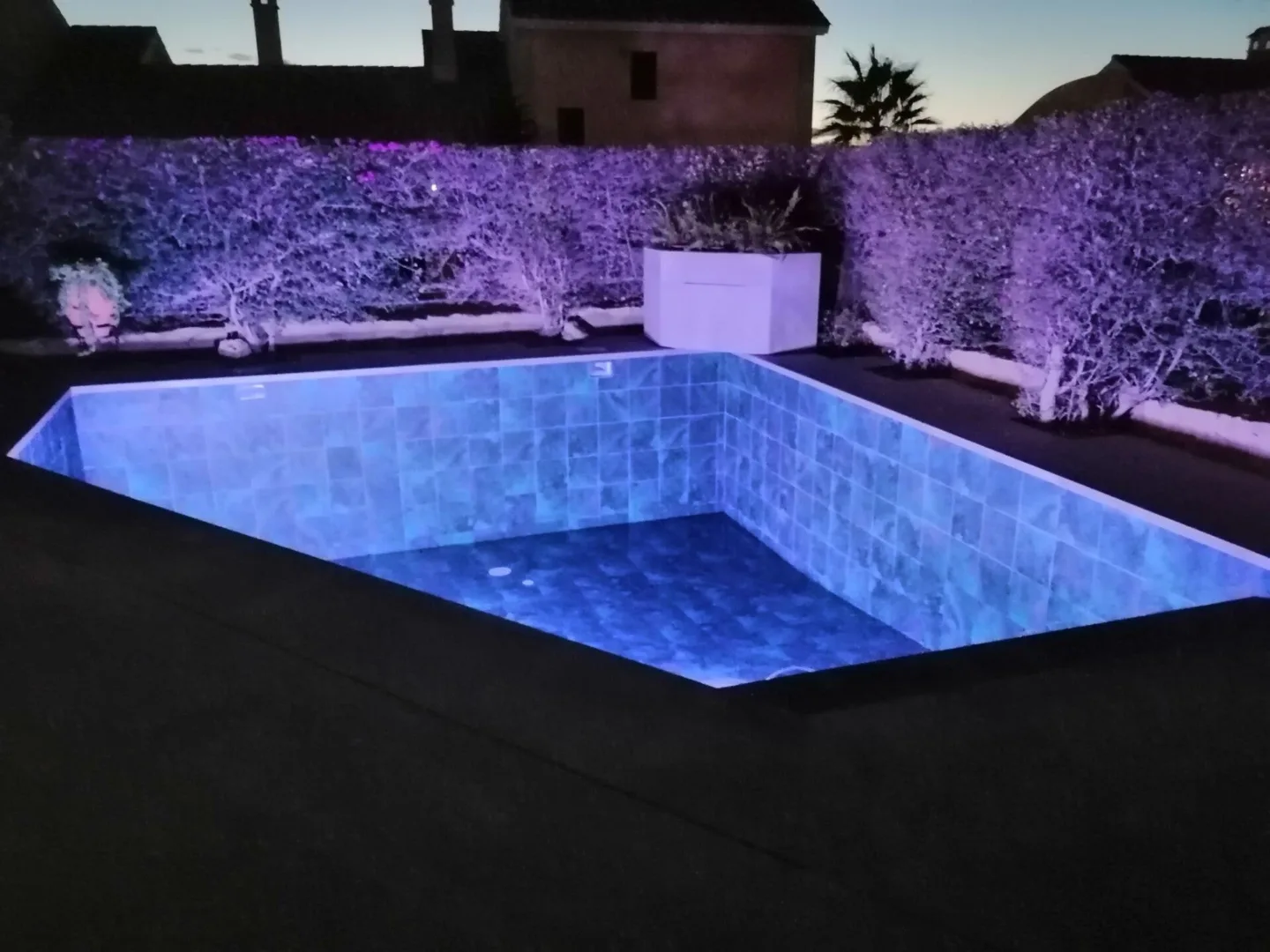
What the filtration system includes and what each component does
“Filtration system” often describes the equipment that moves and filters pool water. In practice, several functions need to work together. The pump drives circulation, the filter traps particles and the disinfection system helps maintain water conditions. None automatically takes over the others’ role.
The pump and filter should be selected as parts of the same circuit. Pool volume, expected use, pipework routes and component characteristics all affect the choice. Choosing a pump simply because it appears more powerful does not guarantee better overall performance.
Find out how the proposed filter is cleaned and which tasks the system requires. Access to its components affects routine maintenance. Before agreeing the quotation, ask for the proposed equipment to be identified and the tasks you or your maintenance provider will need to handle.
Disinfection can be provided by different equipment, including salt chlorination. Coordinate the choice with the plant room and planned controls. For a new concrete pool, considering these functions together allows the circuit to be designed around clear requirements from the outset.
Skimmers or overflow: how water is collected and returned
Water collection is part of the pool design. In a skimmer pool, skimmers draw surface water into the planned circuit. Their positions need considering alongside the return inlets and pool shell shape, rather than being chosen solely because they are convenient to install.
In an overflow pool, water passes over the edge into a channel and enters the circuit designed for that arrangement. The system may need a balance tank and other specific components. Their sizing and operation require technical design suited to the particular project.
Return inlets feed water back into the pool. Their distribution works with the collection points to support suitable circulation. Suction points and other necessary fittings also need defining, with applicable safety arrangements and installation conditions. These components cannot simply be positioned at random after the structure is finished.
Choosing between skimmers and an overflow system affects the pool edge, equipment and space required. Make this decision during design. Changing the arrangement after the shell is built may involve substantial alterations across the installation, beyond replacing a visible fitting.
The plant room needs space for maintenance
A plant room or equipment enclosure needs room for the equipment and the work carried out around it. Valves must be accessible, filters need opening where required, and components need removing. Drawing only the external dimensions of each item can leave those working spaces unresolved.
Consider its position alongside pipework routes. Distance, changes in level and routing affect the hydraulic design. Its relationship with bedrooms, terraces and neighbouring plots also matters when assessing equipment operation and any disturbance it may cause around the property.
Before finalising the layout, review:
- Access for inspection, maintenance and component replacement.
- The ventilation and protection required by the equipment.
- Measures to prevent water entering or accumulating.
- The positions of electrical panels, controls and connections.
- Space for disinfection equipment and possible future additions.
A separate housing, cabinet or integrated room may work if it meets the system’s needs. In compact patios in Los Montesinos or San Miguel de Salinas, reserve this space from the first layout. Concealing equipment should still leave it accessible and suitably accommodated.
Lighting and heating: plan the preparation early
Lighting requires decisions about positions, light fittings and connection routes. Some systems need housings or service openings built into the pool shell, so these must be coordinated before gunite application. Consider where the light will point and how it will appear from the house and seating areas.
Qualified professionals should design and carry out the electrical installation, using the appropriate components and protection. As the owner, you need to know where the controls are and which operations belong to normal use. The installation team should resolve the technical details.
If pool heating is planned, assess the equipment, its location and required connections. Depending on the system, airflow, noise, condensate drainage and installation clearances may matter. Reserving an empty corner is insufficient without checking the requirements of the intended equipment.
Include the pool cover in this discussion because it affects heat loss and pool use. If heating will be added later, specify the pipework, space and electrical capacity being allowed for. Future provision needs enough detail to make it usable when the equipment is installed.
What to settle before gunite application and handover
Before forming the pool shell, review everything that will be built into it or affect the structure: water collection, return inlets, pipework openings and lighting. Coordinate steps, benches and other features to prevent clashes. The precise installation sequence depends on the construction method and individual components.
Pipework that will become concealed should undergo the planned checks before it is covered. Keep a record of its routes and main connection points. This helps locate components during maintenance and reduces uncertainty if part of the surrounding area is altered later.
Commissioning checks how the complete system operates and allows the necessary adjustments. Handover should include a clear explanation of controls, valves and routine tasks, together with available documentation. Clarify which checks need professional assistance and how to recognise a problem that should be reported.
When reviewing a proposal, ask for the complete system and future provisions to be described. A general phrase such as “filtration included” does not explain disinfection or maintenance arrangements. Clear descriptions before construction make the completed installation easier to understand, operate and look after.
OndaMar coordinates the pool shell and its systems while defining the construction work. You can tell us which equipment you would like to include so we can assess how it fits into the project.